.jpg?width=1300&name=Aftermovie%20thumbnail%20(1).jpg)
On 8 October 2026, RetailSonar turned 15. Customers and partners joined us at Theadrôme in Wilrijk (Antwerp), and speakers from our customers Basic-Fit, Rossmann, and The European Pizza Company took the stage. Moderator Els Breugelmans summed it up in her wrap-up: "I saw fitness, pizza and drugstores… so there must be something else that connects all these presentations, and that's of course location."
Els Breugelmans (KU Leuven): vacancy is a local problem
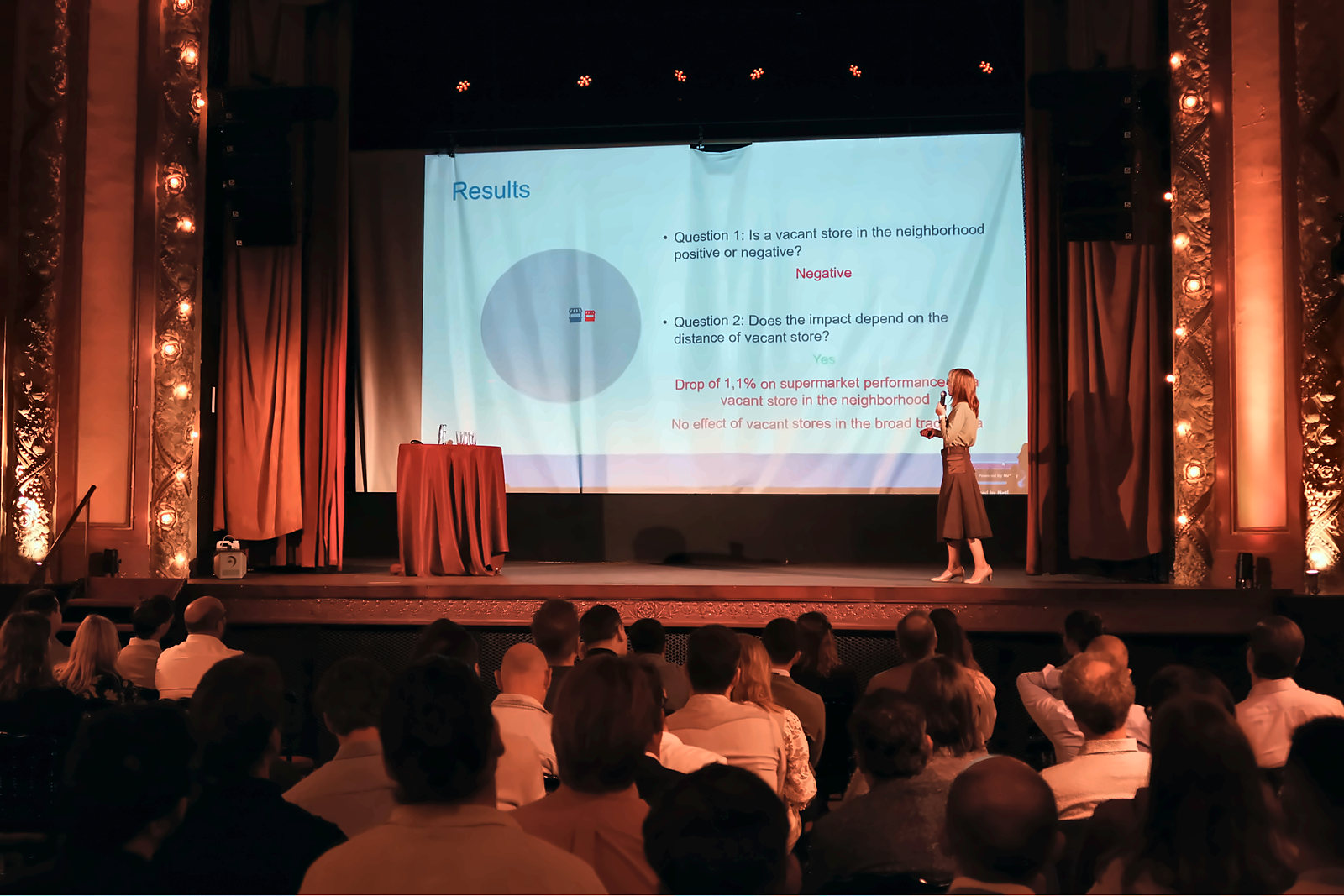
Do empty shops hurt the stores around them? Els Breugelmans, Professor of Marketing at KU Leuven, studied around 3,000 Dutch supermarkets. A vacant unit within walking distance lowers supermarket performance (-1.1%); a few kilometres further, the effect disappears. A competing supermarket next door hurts even more (-3.9%). Some neighbours help: hard discounters (+3.4%), office and postal services (+3.1%).
Why it matters for location strategy: the neighbours and their distance are deciding factors for location performance. That's catchment area, competition and perfect neighbours. RetailSonar's data has uncovered these effects and many more for 15 years now.
Can cities fix vacancy? Yes, if they pick the right projects. German data showed that retail-oriented projects reduce vacancy, while broader city projects (such as parks or green corridors) don't. Within retail projects, functional ones that make a centre easier to reach and find work far better than those focused on attractiveness, such as greenery, murals or new buildings.
Basic-Fit: proximity to the consumer is key
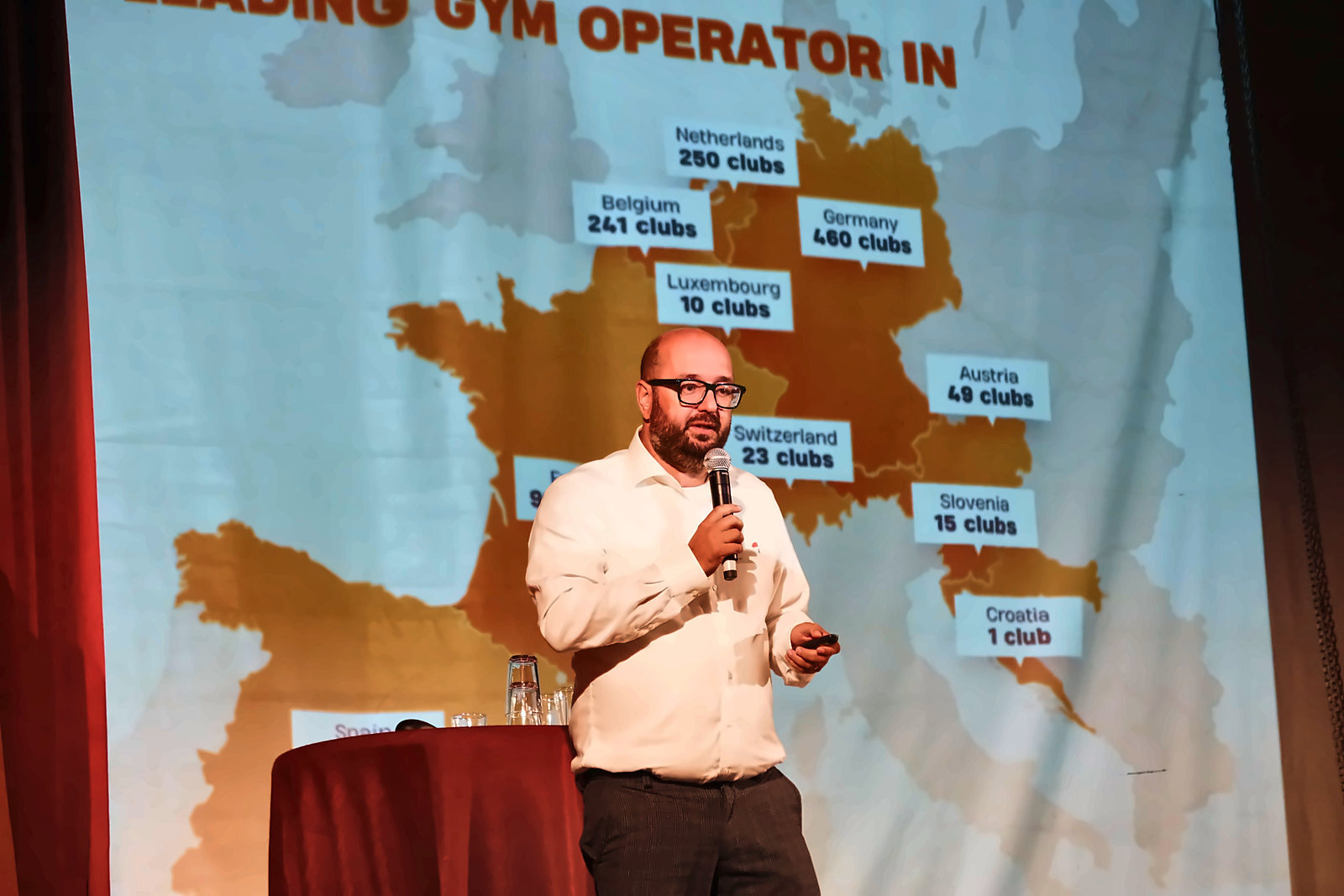
"Today we celebrate 15 years of RetailSonar, but I've actually also been working at Basic-Fit for 15 years," said Adriaan Bos, Finance Director. In that time, Basic-Fit grew from 200 to around 2,200 clubs and became the market leader in Europe.
Its mission is to make fitness accessible, and proximity is key to taking away the barriers to work out. That's what makes location so important. Basic-Fit now grows through three channels, used differently per market:
- Organic, in clusters. Once planned in Excel, now with RetailSonar, to predict how many members a location needs to break even.
- M&A, for critical mass. Integration risks fade, but "buying a bad location will hurt you a lot longer." So deals are assessed from a location perspective.
- Franchise, for capital-light growth.
Adriaan explains how Basic-Fit uses the RetailSonar platform: to assess whether a new location will be profitable, and whether existing ones will stay profitable. "RetailSonar saves us time in the analysis, but mostly it gives a much higher quality analysis," with more depth and a clearer view of why a location will work.
His closing slide said it in one line: Different markets. Different strategies. All powered by location intelligence.
The European Pizza Company: the right price is a local price
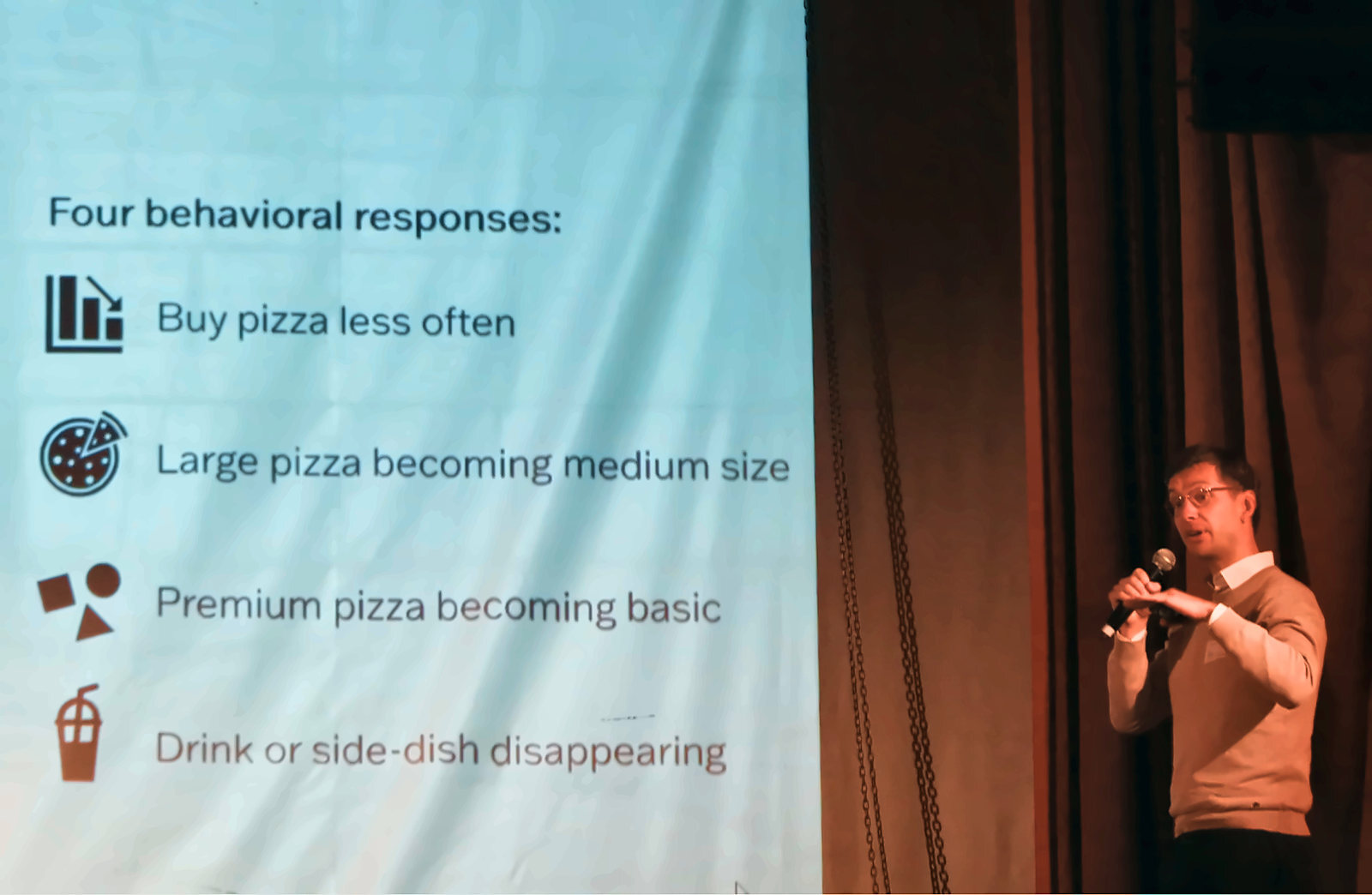
Jaap Wildeboer, Strategy & Performance Director at The European Pizza Company (New York Pizza, Da Grasso and Kotipizza), showed why one national price misses the mark. When prices go up, customers change their behaviour: they buy pizza less often, a large pizza becomes a medium, a premium pizza becomes a basic one, and the drink or side dish disappears.
The answer was to price per store, based on local signals such as the nearest competitor, the store's own customer rating and local income. As Jaap put it in the aftermovie: "Pricing is a very local matter." To find out how much customers are willing to pay in each area, The European Pizza Company uses RetailSonar data.
His rule: "The best price is not the highest price. It is the price that maximizes sustainable margin."
For location strategy: the same catchment and competition logic that decides where to open also decides what to charge there.
Rossmann: a local assortment for every store, based on its catchment area
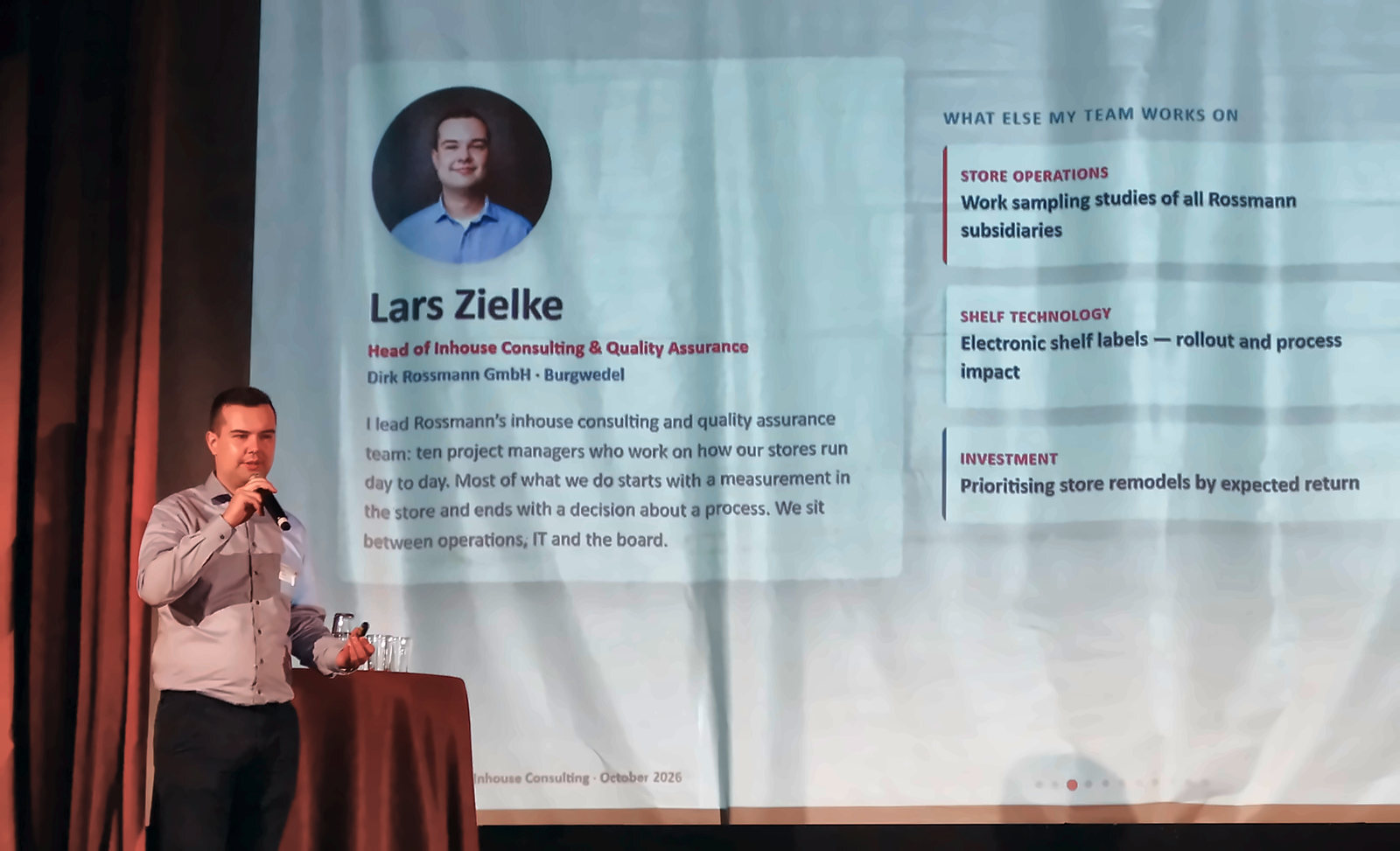
Lars Zielke, Head of Inhouse Consulting & Quality Assurance at Dirk Rossmann GmbH, explained how Rossmann adapts in Germany, where the best sites are taken. Instead of one fixed concept looking for a location, the local area now decides the store: its size, category mix, quality level and design. Competitive data from RetailSonar feeds the model that sets the assortment of its smallest stores. An Aldi nearby? Then the store stops selling wine.
The biggest value of RetailSonar for Rossmann? "The real value is to actually know the customers that actually go to a certain store": the real catchment area, not a radius, and the demographics of the people in it, such as their wealth, age and family size.
And will algorithms pick locations? "Expansion is an extremely human business," he said. Finding good offers stays with people; deciding how the store should look will rely more and more on AI.
RetailSonar: 15 years of solving the right questions
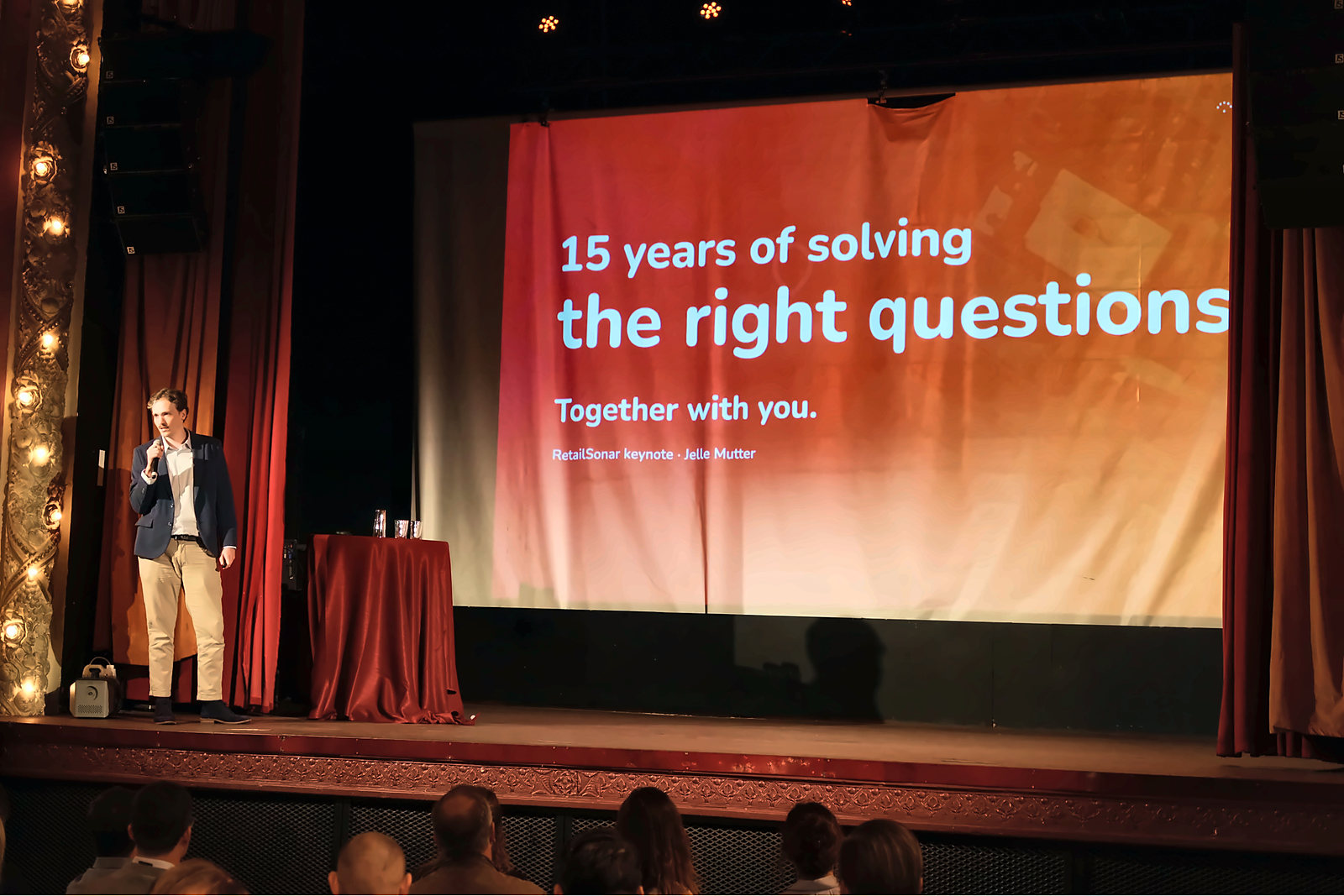
Jelle Mutter, Senior Customer Analytics Consultant at RetailSonar, showed how customer questions shaped this year's roadmap:
- "Can I trust the numbers?" Car passage was rebuilt on the newest road network in 10+ countries, and we report the accuracy of each model.
- "How do I test a market change, straight away?" Optimize loads any retail brand and simulates a takeover, with no data preparation. From a months-long study to a few clicks.
- "Which available property matches my opportunities?" PropertyScanner connects vacant retail space with the retailers it fits. In CEO Dieter Debels' words: "Every empty store is a question. Every retailer that wants to optimize is an answer. We just had to bring them together."
Next on the road: the very best location data, with broader footfall areas, smarter algorithms and transparent, measured quality. And AI at the core of the platform.
Five awards for five special customers
For the first time, Dieter handed out customer awards to thank those who helped us learn and improve:
- First pin on the map: Decathlon, a customer for all 15 years.
- Mapaholic: Sonova, the most active user of our platform.
- The ambassador: Jumbo, who recommends us most to peers.
- The innovation hero: Storm, who pushed us to build something new.
- Beyond borders: Goudwisselkantoor, who took RetailSonar abroad.
A word of thanks
Thank you to Els, Adriaan, Jaap and Lars, and to every customer who trusted us in the last 15 years. As Dieter closed the day: "Let's create many more pins on the map together in the coming years."
Watch the aftermovie
Missed the day, or want to relive it? In two and a half minutes, customers from Decathlon, Goudwisselkantoor, Jumbo, Basic-Fit, Sonova and The European Pizza Company share how they work with RetailSonar, from opening new stores to checking the existing network and pricing per area.
Got a question you haven't found the answer to yet? Bring it to us.