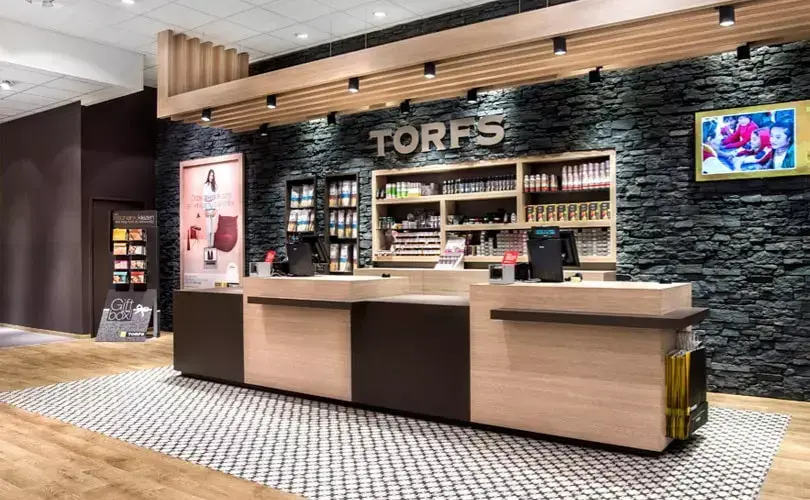
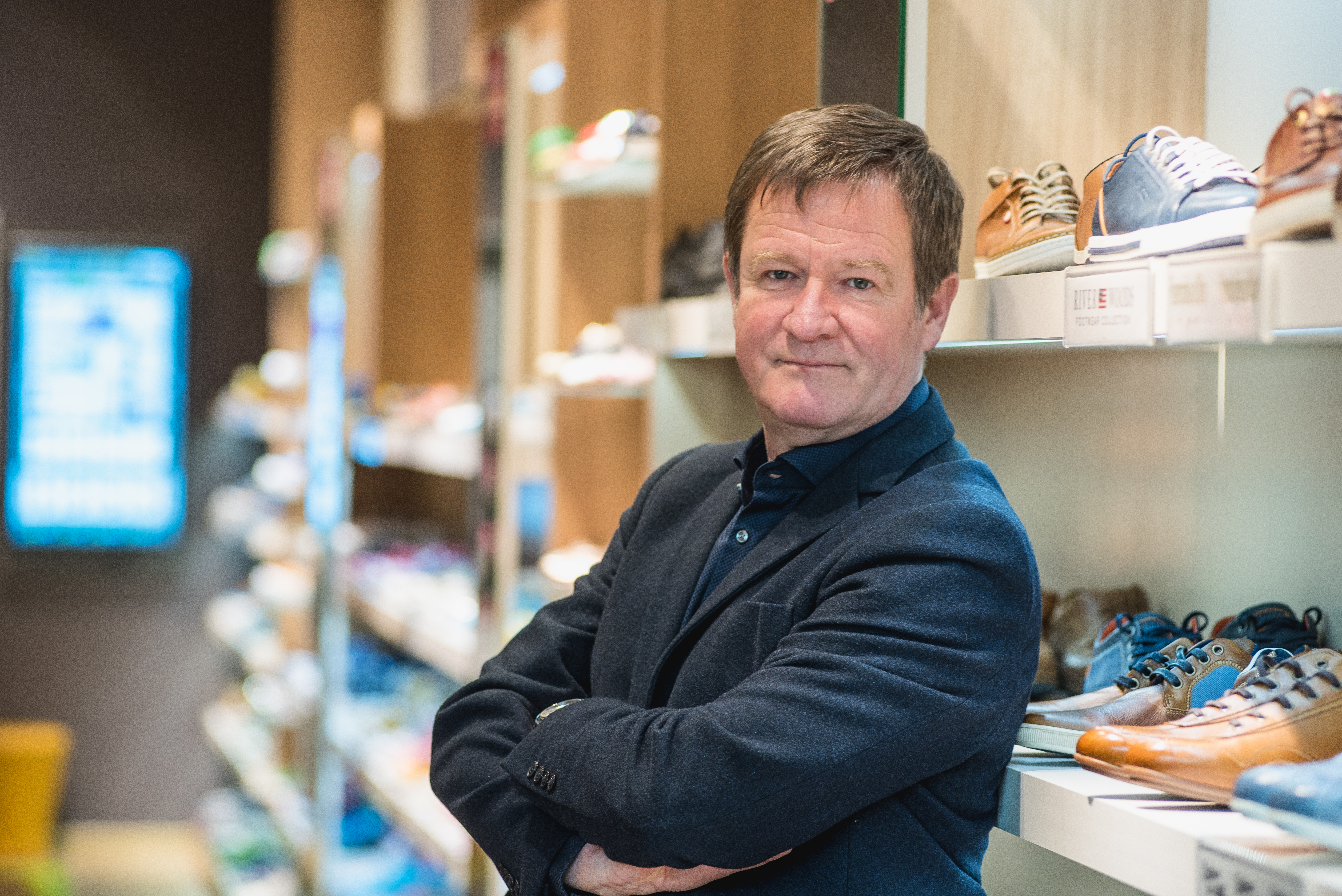
Schoenen Torfs was founded 70 years ago. Today, this Belgian shoe retailer is still a 100% family-owned business. CEO Wouter Torfs, part of the third generation, is the well-known face of the company. We asked him about his experience with RetailSonar and his vision on data-driven retail. “We not only make decisions much faster, but also with greater confidence.”
Torfs is doing well. As of 2018, the company has 75 stores and nearly 700 employees. There is also a successful webshop, accounting for 15% of the annual total revenue of 143 million euros.
Powerful additional parameters
Six years ago, Wouter Torfs came into contact with RetailSonar. “At the time, Dieter (Debels) gave a presentation about the tool he had just developed. His story appealed to me because it offered an objective foundation for decisions we used to make purely based on gut feeling. Don’t get me wrong, there is nothing wrong with a healthy gut instinct. You don’t just throw away thirty years of experience. But RetailSonar introduced important extra parameters such as purchasing power, shopping flows, competitor strength, perfect neighbours, the quality of the location and visibility. This gives us an objective second opinion when making decisions.”
Internal cannibalisation
Torfs uses the RetailSonar platform for two types of cases. “On the one hand, we create revenue forecasts for expansion opportunities. Based on these predictions, we draw up a budget and decide whether or not to proceed.”
“But when you have 75 stores in Flanders, the concept of cannibalisation becomes even more important. Opening another store somewhere isn’t difficult, but you still have to earn back that 700,000 euro investment.”
“A new Torfs store costs around 700,000 euros. You obviously need to earn back that investment. Thanks to the platform, we can see whether enough margin remains.”
“In the platform, we can see the internal cannibalisation on our existing stores. Only when, after estimating revenue and cannibalisation, there is enough margin left, do we give the green light for a new project. Especially since the rise of e-commerce, it no longer makes sense to blindly keep expanding.”
A co-creative collaboration
Building a predictive model is an iterative process. And Wouter Torfs wants to emphasise that. “The model becomes stronger as you feed it more data. You really work together in a co-creative way.”
“Take, for example, calculating the strength of store management. That is very hard to estimate, yet it is one of the most important factors. From experience I now know that people make the difference. Even if the location is poor, a top team can work wonders. Today, based on a score per store, we also include the impact of management in the model.”
“Over the years, I have seen the tool become more and more accurate, partly due to more detailed data. Today, you can see that the model’s predictions are very close to reality.”
“The model becomes stronger as you add more data. Today, you can see that the predictions are very close to reality.”
This has positive consequences for the internal decision-making process. “We not only make decisions much faster, but also with more confidence. Our Board of Directors now has great trust in the accuracy of the analyses. A dossier based on RetailSonar figures passes without effort — really a piece of cake.”
“So you can write it down: I consider RetailSonar a great example of a tech startup that has delivered on its promises.”
The step toward data-driven retail
In recent years, the importance of data in the retail sector has grown exponentially. A trend Torfs did not escape. “I will be very honest: for a long time, we were running behind. You do not become a data-driven organisation overnight. Internally, you must first create enough space and resources. So we made sure that our COO can now focus on actively and proactively developing a vision around data.”
“Everything starts with the quality of your database. In the past two years, we have collected more than one million addresses, all up to date. In addition, we have the email address of 95% of our customers. Thanks to our friendly Torfs approach, people are happy to share their information.”
“I will be very honest: for a long time, we were running behind. You do not become a data-driven organisation overnight.”
Torfs started collecting data late, but that had one big advantage. “We were able to set up our data collection correctly from the very beginning. That is a major asset compared to many other retailers, who often struggle with missing or inconsistent data or need to merge multiple databases.”
In the meantime, Torfs is ready for the next step. “We are well aware that being relevant to our customer is becoming increasingly important. That is why, in the coming months, our marketing team will focus on sending intelligent messages — linked to community building — to continue growing.”
Wallonia and sneakers
Wouter Torfs also wants to continue growing in other areas in the coming years. Two new initiatives stand out. “In mid-2018, we opened our first Walloon store in Libramont, which is performing better than expected. Wallonia is a completely different market, with very different dynamics. We are not aiming for full expansion there, but we are keeping our eyes open for interesting opportunities.”
“In addition, we started a partnership with The Athlete’s Foot, a trendy American sneaker concept with around a thousand stores worldwide. In this way, we prepare ourselves for the increasing importance of sneakers. For locations, we now look primarily at shopping centres, although we are also very curious about how such a sneaker concept would perform in peripheral areas.”
“In the coming years, we want to grow smartly and in a well-founded way both in Wallonia and with The Athlete’s Foot. I have no doubt that RetailSonar will be able to support us excellently in that.” (laughs)